

Anna Burnside reviews a production with ‘impressive central performances.’
Sally has finally made it out of Cowdenbeath. She is living the life she thought she always wanted in London, slogging in a fancy law firm, convincing herself that she is fitting in.
When her father dies, she returns to Fife, delivers a woeful eulogy and is all set for the next train south. Then, problem. Her father’s final wish was that his ashes should be scattered on the pitch at Central Park.
So far, so straightforward. But he added a kicker. After a win.
Gary McNair’s adaptation of Ron Ferguson’s lovely book follows the pair through Cowdenbeath’s disastrous 1992 season. The newly promoted joiners and electricians struggle against Division 1 heavyweights, some of whom no longer exist.
Dawn Steele’s cleverly-judged Sally addresses the audience directly, in a very McNair way, as she shuttles up and down, clutching an urn on the night bus. Barrie Hunter is tremendous as her ex-miner father, full of dad jokes, teaching his wee lassie about Tewfik Abdullah when she would prefer the Cat in the Hat.
Beneath the football chat - which is well judged and funny, especially the ongoing rivalry with Dunfermline Athletic - this is a play about the very Scottish theme of how you leave and then come back. It’s about the role rubbish football clubs play in families and communities. Swap the colours and it could be Partick Thistle. Widen the scope and it’s the Tartan Army.
The secret sauce here is the music, 13 poignant songs - some are more like fragments - written and performed by Ricky Ross. They add texture and poignancy, rounding out the themes, anchoring the impressive central performances.
James Brinning’s light touch direction, helped by unflattering, realistic lighting and a scruffy period set, keep it immediate and natural. This is the antidote to the fan hagiography shows and can be enjoyed by audiences who do not suffer from Mad Cowdenbeath Disease as well as those who do.
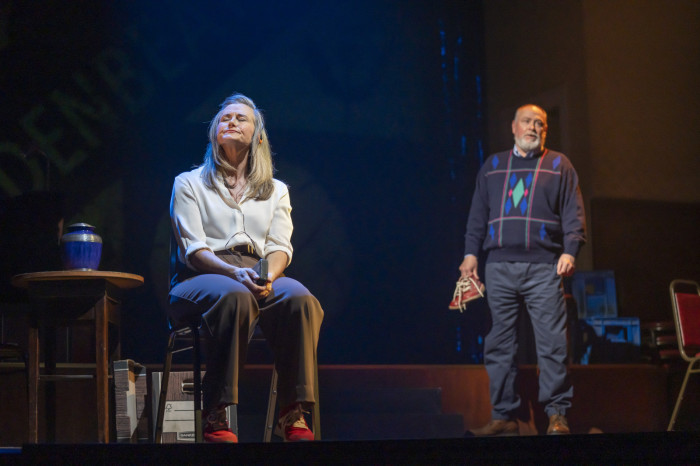
Black Diamonds and the Blue Brazil performs at the Royal Lyceum Theatre Edinburgh until 23 May 2026. For further information, go to the production’s website.
Photo by Aly Wight.

 RSS
RSS